Third-ring laboratory / Closed ecology research
A small world.
A patient question.
When no new material comes in, where does change begin? We stay with one chamber, watching for the slow changes a short experiment might miss.
Read the R3 experiment recordResearch index / OE-R3-2140 v1
01The complete R3 record ↗02Five observations & source data ↗03People behind the instruments ↗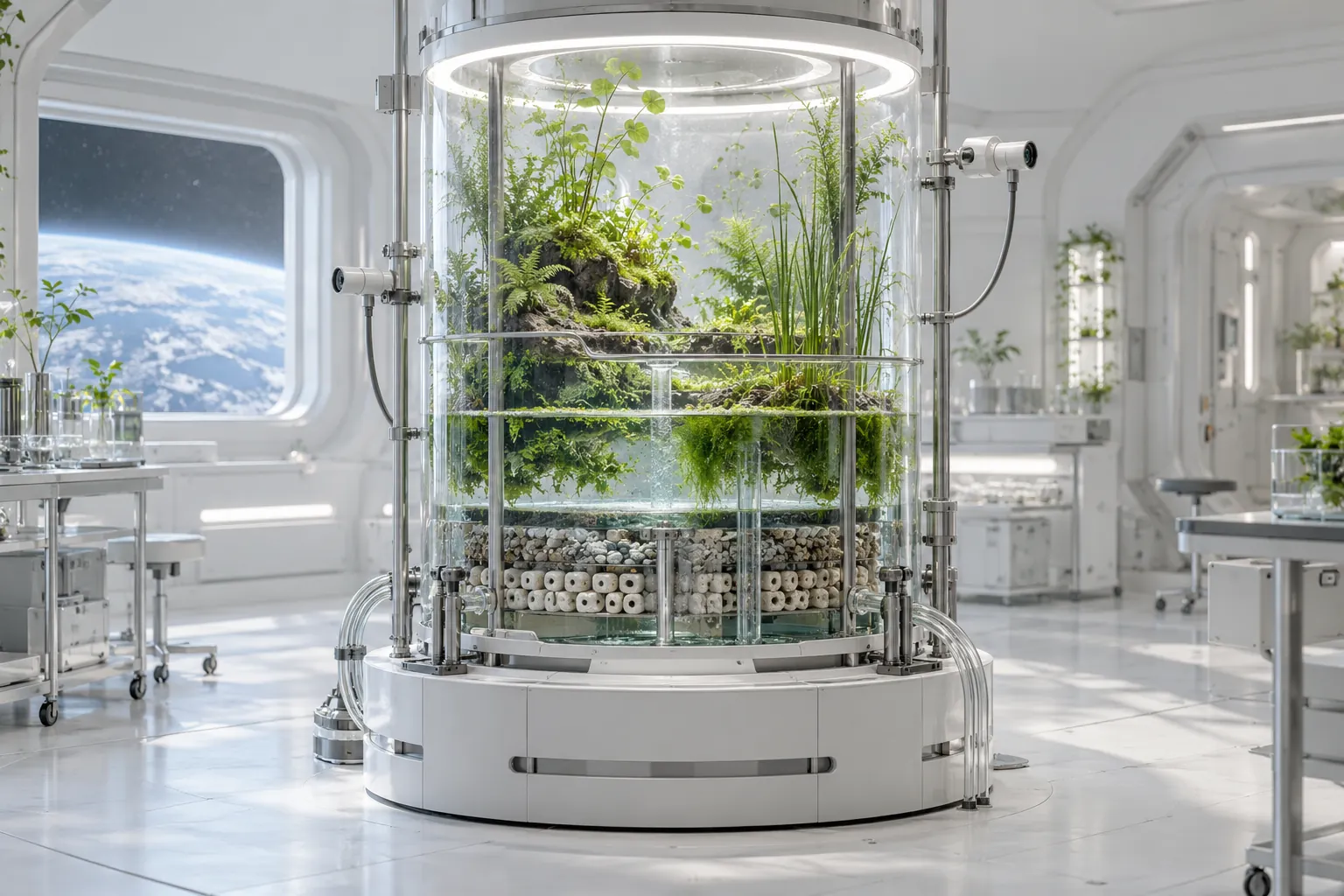
Fig. 01 / Chamber concept. An illustration of energy and material paths, not a measured drawing, photograph or live reading of R3. Select a layer to read it.
Light
Energy enters through the illuminated roof. Light crosses the material boundary; it is not a replacement for nutrients. The drawing shows a light path, not a measured lamp setting.
01 / Questions in circulation
Closure is a boundary.
Exchange continues within.
The long-duration chamber
A water loop, a gas headspace and an illuminated algal bed share one chamber. Five released observations keep their dates and units. They do not stand for a satellite city.
Reading through a window
External references, lamp drift and window fouling come before an optical reading. Optical density is not substituted for biomass.
Keeping slow changes apart
Gas changes within a lighting cycle; cultures respond over days. Sediment and nutrient imbalance may take months. Each needs its own record.
Experiment calendar / not a seal certificate
—2151-10-01 · Day 1: 2140-03-22
Current seal status unknown
Log coverage: 2151-09-30 00:00 through 2151-10-03 18:00, UTC+08. A continuing count does not establish observed, continuous closure.
02 / Small budget, careful measurements
We share instruments.
Every reading has an owner.
OuterEco is a small laboratory, founded in 2087 and working at the third ring since 2124. We study long-lived closed ecological systems, with a particular interest in satellite-city algae.
Mara Lin maintains the material-boundary log; Oren Vale checks optical methods; N. Sen tends external comparison cultures. Research student Liu Wen records sediment images and readings that cannot be interpreted. A limited budget makes a useful record of failure matter.
R3 contains no human food-production system and is more uniform than an inhabited district. Stable oxygen is not evidence that the whole system is stable. One chamber cannot answer for a city.
Read what remains unsettled03 / Visit from outside the boundary
See the experiment.
Keep the window closed.
2151.10.03
13:00–15:00 / UTC+08
This dated open-day plan meets in the third-ring observation corridor: a boundary-log introduction, external optical observation and failed-reference comparison. Six visitor places appear in the plan; this page shows no remaining capacity and takes no bookings.
A named orbital-shuttle reservation and access note are separate requirements. The visit includes no chamber opening, specimen collection or material transfer.